
(It's been) a great long run.
1b. Wimbledon, 1980

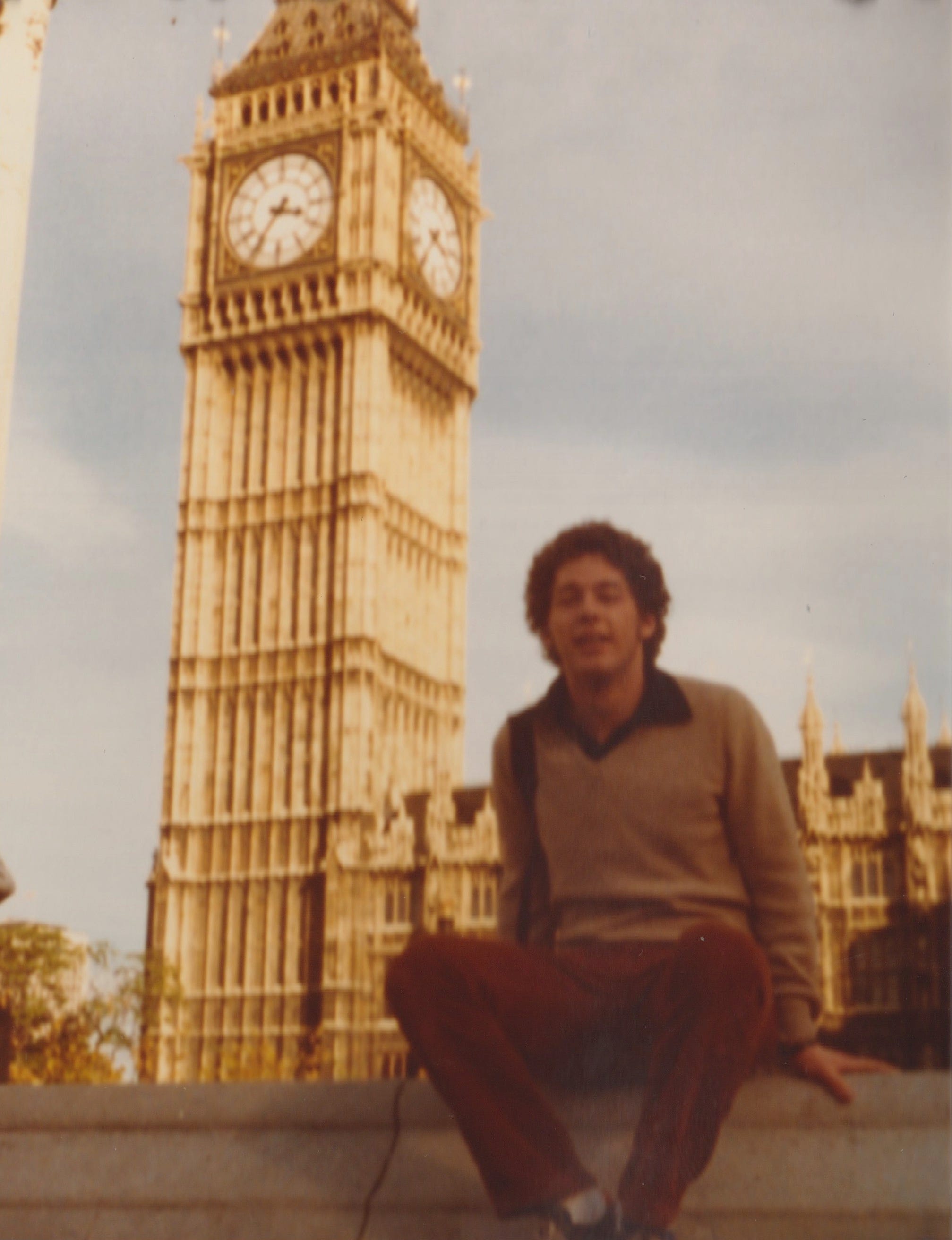
Going forward these posts will not be in chronological order, but I’ll start with the first one that I remember. It was the first time I ever ran in a foreign city.
I was 20 years old, living in Wimbledon, England. I took the fall semester of my junior year off to go to England and, of all things, play badminton. After an extraordinarily successful freshman year in college, I had a disastrous start to my sophomore year. It was due to a combination of math and physics being hard for the first time, relationship problems, and a near death experience in Mexico over Thanksgiving 1979 that left me with lingering stomach problems. This downward spiral took most of my second semester of sophomore year to fix. I pulled out of it only when, following a friend's advice, I decided to go to England to see how good I could really be at badminton.
I'd been playing badminton since I was eleven years old. After my freshman year in high school, I quit all other extra-curricular activities to focus on the sport. The agreement with my parents was as long as I kept up my grades—and told them I would go to medical school—I could train and play as much as I wanted.
I didn’t have the same natural talent as others, so I made up for that by working harder than everyone else. There was a private indoor badminton club a few blocks from my house in Manhattan Beach. Because it was one of the few facilities dedicated to Badminton in the United States in those years, most of the best players in Southern California played there in the seventies. I played or trained most every day after school, sometimes late into the evening. Some Sundays I played six hours straight. I remember days at school where I was so sore and tired I could barely walk down the steps between classes.
When I was 16 years old, I competed in the finals of the U.S. Junior National Championship, earning the number two national ranking and traveled to Mexico and Canada for the Pan-Am championships. By the time I was 18, I was playing mostly adults and even had a win over the reigning National Champion. I was encouraged to attend Pomona College by the dean, Stan Hales, who had won the Adult National Championships. With his guidance and training, I won the California state collegiate badminton championship my freshman year.
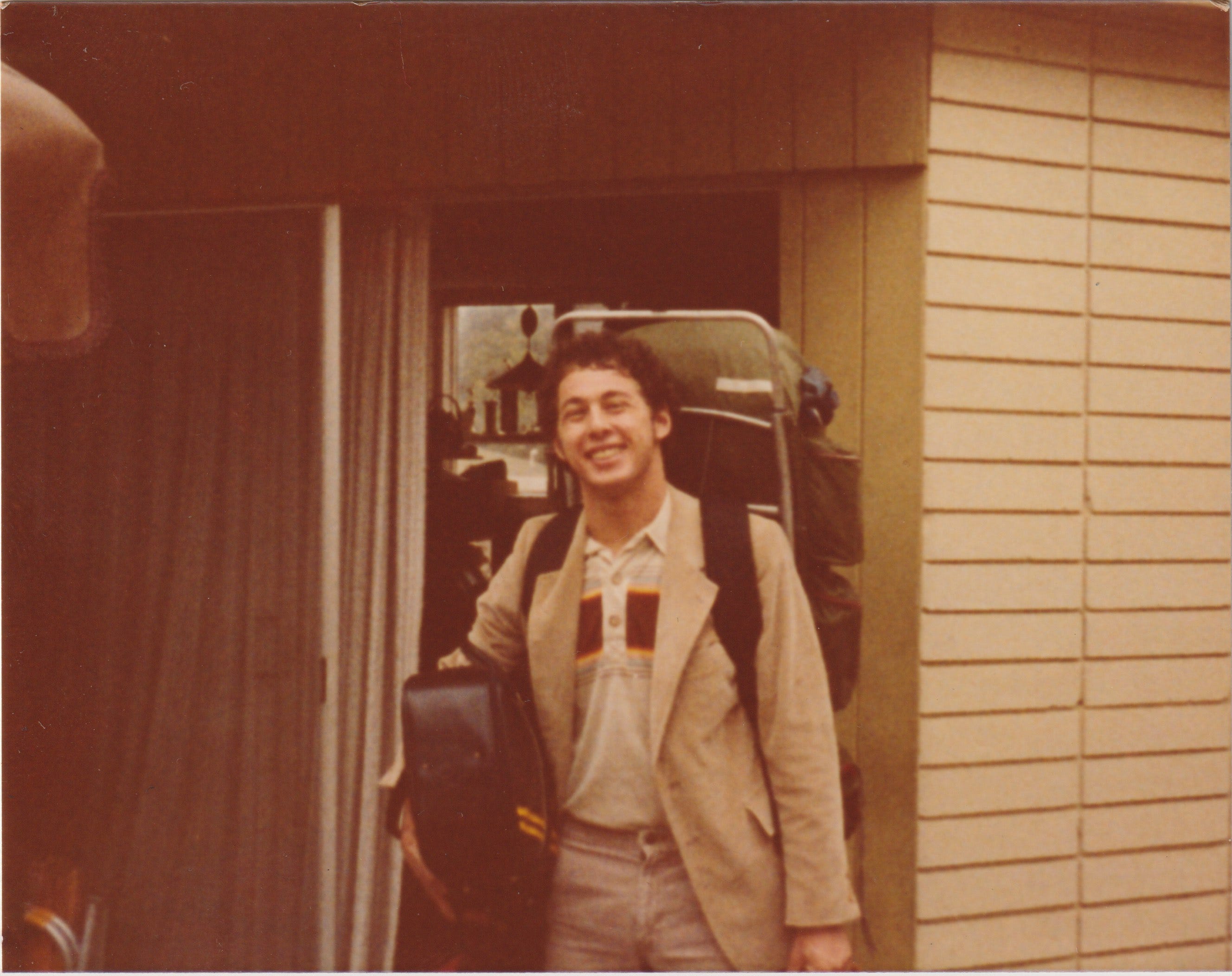
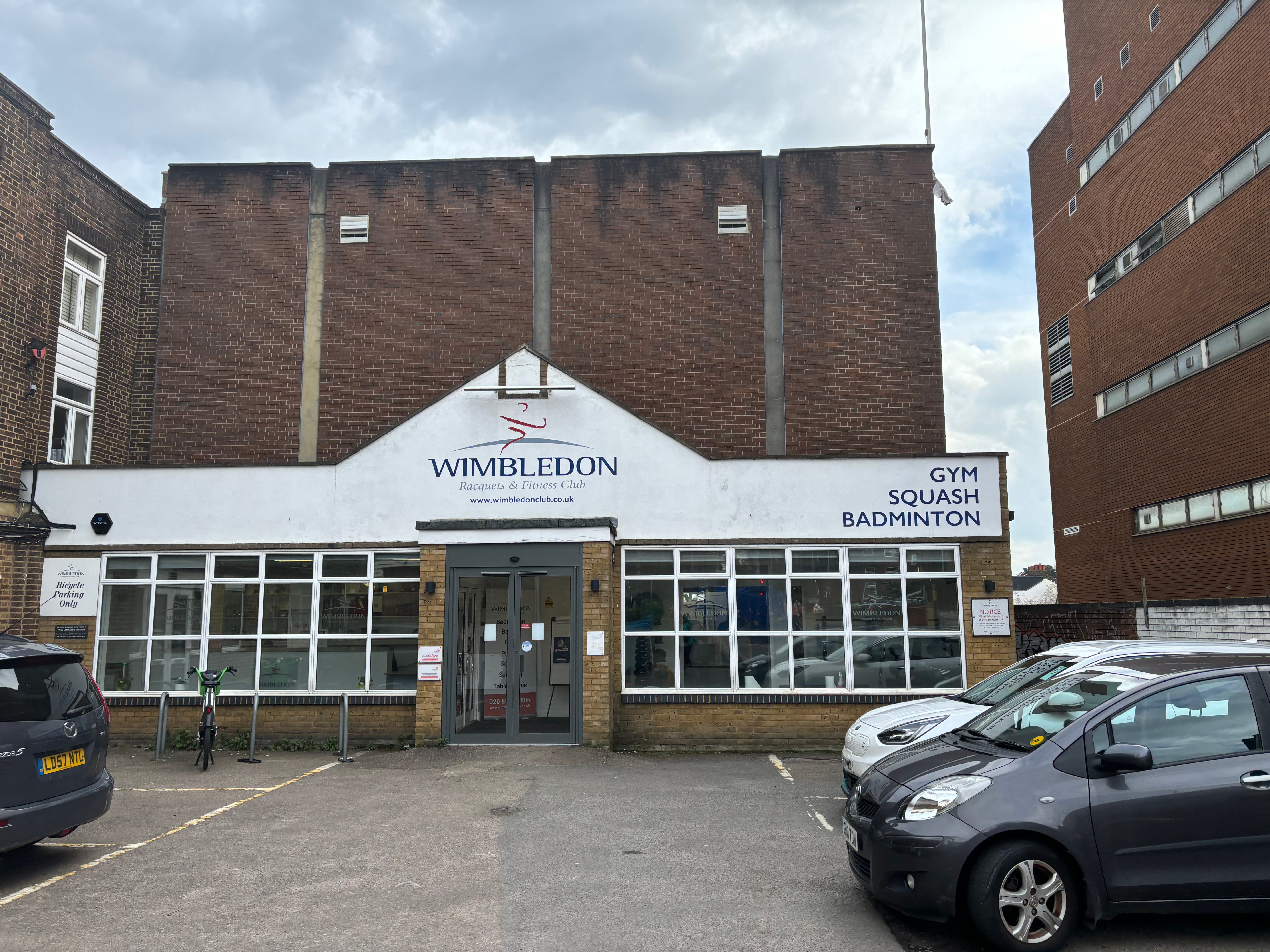
So, in October 1980, I headed off to England, with a bag full of rackets, my backpack, and a suitcase full of white clothes. I joined the Wimbledon Badminton and Racquets Club and after a long night of try-outs earned the right to play on their elite A night—every Thursday.
I played badminton almost non-stop the first weeks there. The highlight for me was winning the Wimbledon Open qualifier tournament. Because the Wimbledon Open was the premiere tournament in England in the fall, I had to enter the qualifying tournament for one of the 32 spots in men’s singles. Four of us did well enough to qualify and earn a spot in the main draw. For some unknown reason (maybe never repeated since), it was decided that the four qualifiers would play each other. I won that single elimination qualifier tournament. For that victory I received a check for five British pounds. Now don’t laugh. A pound was worth $2.50 in 1980…not the $1.30 it is worth today.
After those first weeks of hard training and tournaments every weekend, I started venturing into central London and other parts of England. I found that travelling in England was more fun than training three to four hours a day. I also came to the realization that maybe my gene pool may have gotten me about as far as it would go.
When I left the US, there were probably only four people in the United States that could beat me regularly, and maybe half a dozen with me at the next level down. However, when I got to England, I noticed there were four or five that I could never ever beat (and I was lucky enough to train with some of them), but there were probably fifty players at my level.
I had some amazing experiences training, playing, and meeting people. I played doubles with two people who won World Championships over the next two years. One of my training partners was dating the reigning women’s doubles World Champion. His coach told me crazy stories of his experience as an operative in World War II and questioned whether (the fictional) George Smiley—or the real spooks at MI6—caught the right person. I made some great friends. I had some spectacular experiences.
In December, I visited Oxford. I spent a night at a quintessential English bed and breakfast and in the morning met another American couple. He was a runner and the three of us decided to walk into Oxford together. I thought Oxford was the most spectacularly beautiful place I had ever seen. I remarked, “Boy, if I had seen this place before I got to college, I would have studied a lot harder.”
We never got to the part about what happened to my academic career as the husband suddenly stopped and said, “This is it.”
And I peered in at a nondescript, decrepit running track. We walked inside. The bleachers weren't very high. The track was dirt and cinders.
He said, “This is it. This is the place where Roger Banister broke the four-minute mile 26 years ago.” A quarter of a century after that famous event, he added, “Let's go run around it. Let's go run around the track.” It was freezing. I was in a heavy coat and wearing thick boots.
I said, “You know what? I'll just hold your camera and you can run around it.”
Later that week, while back at the Wimbledon YMCA where I was living, I knew that was a missed opportunity. When would I get the chance to do that again? In the middle of December, just a few days before the start of winter, and a few weeks before I would be leaving England, I realized that I had not yet visited the Wimbledon Tennis Center. It was only two and a half miles from where I was staying. I didn’t want to miss another opportunity. Thinking about it then—and especially now with my health situation — one does not get many repeat chances in life. This is true whether it’s running in a place you might not visit again or a dozen other possible one-in-a-lifetime events. I was going to start a new chapter in my life by not missing this one.
I didn't travel with running clothes in those days. I probably ran in an old pair of Adidas Superstars with kangaroo leather. I didn’t own a pair of running tights in 1980 so I wore sweatpants for the cold. I put on the long calf-high socks that everyone wore and grabbed an extra pair to use as gloves.
I headed downstairs from my room that I had called home for two months. The small room did not have a bathroom, only a tiny sink. But I didn’t care. All the residents hung out in the lounge, gym, dining hall, or lobby. In the lobby, I said something to Mrs. Penny who ran the place and exchanged pleasantries with the “guard.” He was in his fifties, but looked much older. He had crazy stories about being a POW in WWII and marching hundreds of miles from camp to camp.
I turned right as I left the YMCA and soon crossed over the Wimbledon train and Tube station. This marvel of early 20th century British engineering included tunnels that put all tracks under this part of Wimbledon. I often took trains from here to London or point further north.
As I passed by I saw one of the bridges that connected all the platforms. In those days, British Rail did not have a system for notifying passengers the exact arrival time of each train, so everyone would wait on the bridge and see which train for London arrived first. When we saw the desired train pull up, we would all race to that platform—the well-dressed businessmen in their three-piece suits and me in my cord pants and small backpack helping all the mothers get down the stairs with their babies and prams.
I then continued running Wimbledon Hill Road, turned on Church Road, and arrived at the All England Lawn Tennis & Croquet Club, as it is formally known. There were no off-season tours in those days and I simply ran around the facility and peered in where I could. Since I felt so good about the start of this running adventure and found myself across the street from the spectacular Wimbledon Park, I quickly modified my plans and ran into part of it and around the lake in its center. I headed back down the hill and, with new confidence in my understanding of the local geography, took a slightly different route through a residential neighborhood—and all the terraced houses—and back to the warmth of the YMCA.
The first overseas run was only six or seven miles, but I concluded that this was a spectacular way to see new places, learn new things, understand the geography and “feel” of a city and its residents, and accomplish something unique. Ever since then, I have tried to seize every opportunity to run in each city around the world I visit. I’m glad I did it for the next 40 years. It is unlikely I’ll get the chance again.
Running Without A Collarbone: Notes on Living with Stage IV Metastatic Cancer
1a. Welcome to my Substack! #RunTowardsIt